Table of Contents
Organizations searching for EHS software that scales from small teams to massive multi-site operations frequently come across HSI Donesafe, the product of a 2020 acquisition that paired a fast-growing, no-code safety platform with one of the most established names in workplace safety training. Backed by private equity firm Waud Capital Partners, HSI has assembled Donesafe alongside training content and chemical management brands into a single EHS ecosystem.
This HSI / Donesafe review breaks down what the platform actually does, how its pricing works, and where it fits — and doesn’t fit — compared with other EHS software. It’s based on HSI’s and Donesafe’s official websites, public reporting on the acquisition and company history, and verified user reviews on G2 and Capterra. Because software pricing and features change, always confirm current details directly with HSI before making a purchasing decision.
Key Takeaways
- HSI Donesafe is a no-code, cloud-based EHSQ platform covering safety, health, environment, quality, and risk management, built by Donesafe and acquired by the Health & Safety Institute (HSI) in February 2020.
- HSI is a family of EHS brands majority-owned by Waud Capital Partners, and has made numerous acquisitions, including e-learning provider SafetySkills, to build a combined training-and-software ecosystem.
- Pricing is not published; costs are calculated based on business size (number of “workers,” not just administrative users) and the number of application modules selected, requiring a direct quote.
- HSI Donesafe serves organizations ranging from 5 to 500,000 employees, with reviewer representation split fairly evenly across small, midsize, and enterprise businesses.
- It’s best suited to organizations wanting a genuinely configurable, no-code EHSQ platform that can start small and scale, particularly those also interested in pairing it with HSI’s separate training content library.
What Is HSI / Donesafe?
HSI Donesafe is a cloud-based, no-code EHSQ (environment, health, safety, and quality) platform used to manage incident reporting, injury and claims management, compliance actions, contractor records, audits, and risk assessments in one connected system. Its defining technical characteristic is configurability: organizations use a drag-and-drop interface to adapt forms, workflows, and dashboards to their specific processes without needing developer support.
The “HSI” in the product name reflects its parent company, the Health & Safety Institute, a family of EHS brands spanning emergency care training, workplace safety and industrial skills training, chemical inventory management, and now, through Donesafe, safety and compliance management software. This means HSI Donesafe customers have a natural path to pairing their software with HSI’s separate training content library if broader safety training needs arise.
HSI / Donesafe Company Overview
Donesafe was founded in 2013 and built a reputation as one of the fastest-growing cloud-based safety platforms, helping organizations comply with regulatory and internal compliance initiatives without the long implementations or large price tags associated with many traditional EHS solutions. On February 4, 2020, the Health & Safety Institute (HSI), a leader in EHS software, training, and compliance solutions headquartered in Eugene, Oregon, announced it had acquired Donesafe, with then-CEO Matt Browne describing the combination as delivering “the most complete workplace compliance and risk management solution in the market.”
HSI has been majority-owned by growth-oriented private equity firm Waud Capital Partners since September 2019, and has pursued an aggressive acquisition strategy since then, including e-learning provider SafetySkills in October 2022, which added roughly 1,700 organizations to HSI’s customer base. HSI’s broader portfolio includes more than 780 training courses delivered through 51,300+ authorized affiliate instructors and 13,200+ third-party training centers across the US and Canada. Donesafe itself reports serving organizations in 71 countries, spanning businesses from 5 to 500,000 employees.
Quick Verdict: Is HSI Donesafe Worth Considering?
HSI Donesafe is worth shortlisting if you want a genuinely no-code, configurable EHSQ platform that lets you start with the modules you need most and expand over time, with the option to pair it with HSI’s substantial training content library under one vendor relationship. Its “worker”-based (rather than strictly administrative-user-based) approach to defining users is specifically marketed as a competitive advantage for organizations with large frontline workforces.
It’s worth approaching with some added diligence given HSI’s private-equity ownership and history of frequent acquisitions, since integrating multiple acquired brands (Donesafe, SafetySkills, and others) into one coherent ecosystem is an ongoing process. Some reviewers also specifically want better reporting flexibility and faster support for complex configuration changes.
Key Features of HSI / Donesafe
Digital Inspections and Checklists
The no-code platform lets organizations build and configure inspection forms using a drag-and-drop function, with reviewers describing the customizability of the system as a genuine advantage for accommodating diverse business units within a single deployment. Configurable workflows and automated notifications support consistent inspection processes across sites.
Audits and Observations
Donesafe supports audits, contractor compliance tracking, and standardized safety processes across sites, giving leadership clearer visibility into operational risk. Reviewers specifically cite the platform’s usefulness for standardizing processes across multiple locations, replacing systems where information was previously spread across disconnected tools.
Incident Reporting
Incident and hazard reporting is a core capability, with real-time data and reporting supporting fast escalation and response. One reviewer specifically praised the accessibility for contractors via QR code access to a public portal, letting non-employees report issues without needing full system credentials.
Corrective Actions
Compliance actions and corrective action tracking are centralized within the platform, with automated workflows and notifications helping ensure follow-up items don’t get lost. Reviewers highlight injury and claims management, along with return-to-work workflows, as particularly valuable for health, safety, and injury management teams specifically.
Risk Assessment
Risk assessments are supported as a core EHS feature, with the platform’s modular framework letting organizations start with essentials like Permit-to-Work or Chemical Safety and expand into more advanced capabilities as needs evolve. This is a checklist- and workflow-based approach to risk management rather than a dedicated, centralized enterprise risk register.
Training and Team Communication
While Donesafe itself includes training and certification tracking within its modules, HSI’s broader portfolio (including its SafetySkills acquisition) provides access to an extensive separate library of 780+ courses and 1,000+ compliance courses across more than 30 languages. Organizations wanting deep, dedicated training content have a natural path to pairing HSI’s training brands with Donesafe’s software.
Asset and Issue Management
Fleet and equipment-related modules are available within Donesafe’s application catalog, letting organizations extend the platform beyond pure safety management into broader operational risk tracking. As with other modules, these are available on an as-needed basis rather than bundled into every deployment by default.
Reporting and Analytics
Donesafe’s in-built reporting supports real-time report generation, tracking of key safety and compliance KPIs, and dashboards that make sense of complex, interconnected data. Some reviewers specifically want better reporting flexibility and more advanced admin function customization, suggesting this is an area to test directly against your organization’s specific reporting needs.
Mobile App Capabilities
The platform is designed to connect systems “from workers in the field to line management and ultimately, to the boardroom,” with real-time, mobile-accessible data entry and reporting. Reviewers describe the system as intuitive and accessible for diverse business units, including field-based contractors accessing the platform via QR codes.
Integrations
Donesafe supports interoperability with existing systems as part of its broader EHSQ management approach, and includes enterprise-grade security protocols such as role-based access controls, data encryption, and SAML/SSO authentication to support compliance with GDPR and regional data sovereignty requirements. Organizations moving from fragmented systems, including competitors like Myosh, specifically cite improved cross-system visibility as a reason for switching.
HSI / Donesafe Ease of Use
Ease of use receives strong praise across reviews, with the platform’s no-code, drag-and-drop configuration cited as central to its accessibility. Reviewers specifically describe the system as stable and easy to use, with the customizability of the overall platform letting organizations make it work for very diverse business units within a single company.
Some reviewers want more flexibility in certain admin functions, and faster support turnaround specifically for complex configuration changes, suggesting that while day-to-day use is broadly well-received, deeper administrative customization can require more patience or dedicated internal expertise.
HSI / Donesafe Implementation and Onboarding
Reviewers who participated in platform releases and configuration changes describe the support experience during implementation as incredible, with specific praise for stability and ease of use even during active development cycles. The no-code configuration approach is designed to reduce dependency on developers or lengthy implementation projects.
Given Donesafe’s modular framework, organizations can start with core modules and expand into advanced features like AI-driven predictive analytics or multi-site compliance management as their program matures, rather than committing to a full-suite implementation from day one.
HSI / Donesafe Customer Support
Customer support receives positive marks overall, with reviewers specifically describing their experience participating in product releases as backed by “incredible” support. HSI Donesafe’s team is noted for responsiveness in helping organizations navigate the platform’s configurability.
Some reviewers specifically want faster support for complex changes, suggesting that while day-to-day support is solid, more involved configuration requests may take longer to resolve than some users would prefer. This is worth clarifying directly for your account’s expected support tier and response times.
HSI / Donesafe Pricing
HSI Donesafe does not publish pricing. The company uses a custom pricing model calculated on business size (measured in “workers,” including frontline employees, not just administrative users) and the number of application modules selected.
| Pricing Factor | How It Works |
|---|---|
| Worker-based pricing | Costs scale by total workers, not just administrative/office userse |
| Module selection | Choose from modules like Worker Safety & Wellness, ESG, Chemical Management, Control of Work, Organizational Risk |
| Contract length | 1 to 5-year contracts available |
| Scalability | Additional workers and/or modules can be added once your plan has commenced |
A few things worth understanding before you request a quote:
- “Worker” pricing is explicitly positioned as a differentiator. HSI states you don’t pay more for administrative workers, and that worker-based costs are a fraction of what’s typically charged per administrative user by some competitors.
- You don’t have to license every module. HSI specifically notes you can pick and choose modules or focus on your organization’s single biggest challenge area rather than buying the full suite.
- A free trial is available. Unlike some enterprise competitors, HSI offers a free trial to test the platform before committing to a contract.
- Ask about training content bundling. If you’re also interested in HSI’s broader training course library (via SafetySkills or other HSI brands), clarify whether and how that’s priced alongside Donesafe software.
HSI / Donesafe Pros and Cons
Is HSI Donesafe good for small businesses?
Yes. HSI Donesafe explicitly serves organizations ranging from as few as 5 employees up to 500,000, and its modular structure lets small businesses start with just the modules they need most rather than committing to a full enterprise suite. The worker-based pricing model and free trial availability make it accessible for smaller teams to evaluate before committing to a longer contract.
What are the best HSI Donesafe alternatives?
Common HSI Donesafe alternatives include EHS Insight for a comparably configurable platform under independent, founder-led ownership, and Novara Flex (formerly KPA Flex) for organizations wanting a similarly strong training library alongside safety forms. BIS Safety Software is worth considering if training compliance is your top priority, while SafetyCulture suits teams wanting mobile-first, low-cost inspections. The right choice depends on whether a combined software-and-training vendor relationship appeals to your organization.
| Pros | Cons |
|---|---|
| Genuinely no-code, configurable platform adaptable to diverse business units | Pricing isn’t published; requires a direct sales conversation |
| Worker-based pricing model avoids penalizing large frontline workforces | Some reviewers want better reporting flexibility and dashboard customization |
| Modular structure lets organizations start small and expand as needs grow | Faster support for complex configuration changes was requested by some users |
| Natural path to HSI’s broader training content library (780+ courses) | Integration of multiple acquired brands is an ongoing process under PE ownership |
| QR-code contractor access simplifies reporting for non-employees | Some admin function flexibility could be improved, per reviewer feedback |
| Free trial available, unlike many enterprise-scale competitors | AI-driven features are newer additions with a shorter track record |
| Scales genuinely from 5 to 500,000 employees across 71 countries | Aggressive M&A history under Waud Capital Partners adds integration complexity |
Who Should Use HSI / Donesafe?
HSI Donesafe tends to be the strongest fit for:
- Organizations wanting a genuinely no-code, configurable EHSQ platform without heavy IT dependency
- Companies with large frontline workforces that benefit from worker-based rather than administrative-user-based pricing
- Businesses wanting a single vendor relationship spanning both safety software and training content
- Multi-site organizations needing standardized safety processes with contractor-friendly QR-code access
- Teams wanting to start with a narrow module set and expand as their EHS program matures
Who Should Consider Alternatives?
A different platform may be a better starting point for:
- Organizations wanting a fully independent, non-private-equity-backed software vendor
- Teams needing more advanced, out-of-the-box reporting and dashboard customization
- Companies prioritizing the fastest possible support turnaround for complex configuration requests
- Organizations that have already standardized on a separate, unrelated training content provider
- Buyers wanting fully transparent, published pricing without a direct sales conversation
Buyer’s Checklist: Questions to Ask Before You Commit
- [ ] How does worker-based pricing compare to per-administrative-user pricing at your specific organization’s size?
- [ ] Which specific modules (Worker Safety & Wellness, ESG, Chemical Management, Control of Work, Organizational Risk) does your program need first?
- [ ] Would pairing Donesafe with HSI’s broader training content library add meaningful value for your organization?
- [ ] How does HSI’s support respond to complex, non-standard configuration requests?
- [ ] What contract length (1-5 years) makes sense given your organization’s evaluation confidence?
- [ ] How do reporting and dashboard customization options compare with other platforms you’re evaluating?
HSI / Donesafe vs. Other EHS Software
HSI Donesafe competes primarily with other configurable, mid-market-friendly EHS platforms, distinguishing itself through worker-based pricing and its connection to HSI’s broader training ecosystem. The table below summarizes how it compares with commonly evaluated alternatives.
| Platform | Best For | Pricing Model |
|---|---|---|
| HSI Donesafe | No-code, configurable EHSQ with worker-based pricing and training ecosystem ties | Custom-quoted by worker count and modules; not published |
| EHS Insight | Configurable, full-module EHS for small to mid-market organizations | Custom-quoted based on modules and headcount |
| Novara Flex (formerly KPA Flex) | Configurable, easy-to-adopt EHS with a strong training library | Per-user, custom-quoted; not published |
| BIS Safety Software | Training compliance, certification tracking, and course delivery | Modular per-user pricing; ~$350/month minimum reported |
| SafetyCulture | Mobile-first inspections and frontline adoption for SMB to mid-market | Per-seat, starting free |
| Benchmark Gensuite | Broad enterprise EHSQ and ESG suite with embedded AI (Genny) | Custom-quoted; modular licensing with no per-user fees |
HSI Donesafe’s core advantage is combining a genuinely configurable, no-code EHS platform with worker-based pricing and a natural path to HSI’s substantial training content library under one vendor relationship. Its main trade-off is that, like other private-equity-backed roll-ups, the ongoing integration of multiple acquired brands is worth watching as a factor in long-term product coherence.
If you’re building a shortlist, it’s worth pairing this review with more targeted research: a head-to-head look at HSI Donesafe vs. EHS Insight or HSI Donesafe vs. Novara Flex, a broader roundup of the best EHS software with integrated training options, and a general EHS software buyer’s guide covering common mistakes to avoid when selecting EHS software.
Best HSI / Donesafe Alternatives
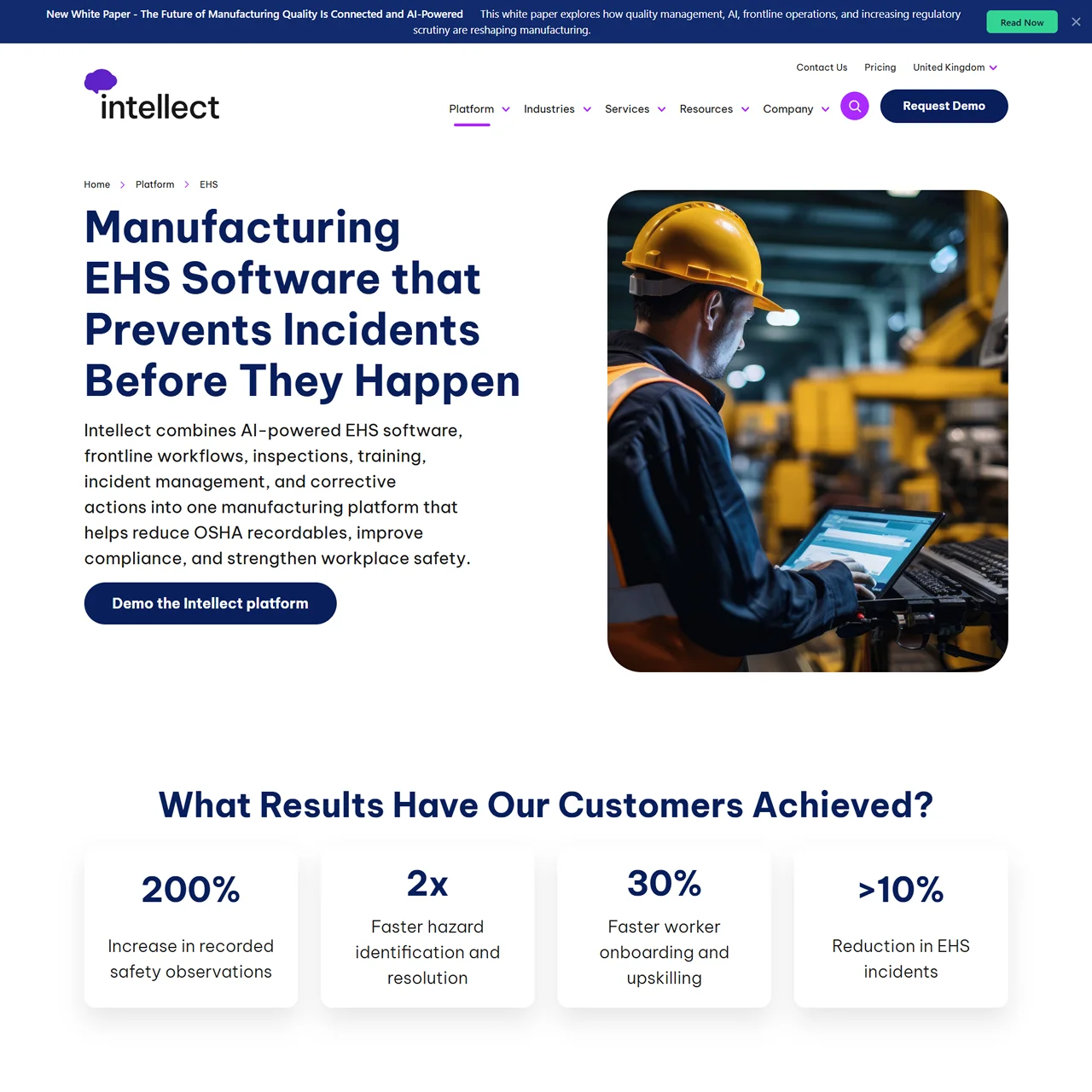
EHS Insight is a strong alternative with comparable modular configurability and an independent, founder-led ownership structure.
Novara Flex (formerly KPA Flex) competes closely on training library depth alongside configurable safety forms, with a similarly relationship-driven support model.
BIS Safety Software is worth considering if training compliance and certification tracking are your primary need, given its distinctive SafetyNET training-provider network.
SafetyCulture suits organizations wanting mobile-first, low-cost inspection digitization with transparent, published pricing.
Benchmark Gensuite is the better fit for large enterprises wanting the broadest possible EHSQ and ESG module catalog with embedded AI.
Final Verdict
HSI Donesafe earns a solid reputation by combining a genuinely no-code, configurable EHSQ platform with a distinctive worker-based pricing model that avoids penalizing organizations with large frontline workforces. For companies wanting to start with a focused module set and expand over time, with the option to pair software with HSI’s substantial training content library, it’s a practical, flexible choice backed by real customer diversity across business sizes.
Where HSI Donesafe asks for a bit more diligence is around its private-equity ownership and history of frequent acquisitions, which means ongoing integration work across its brand family is worth understanding directly. A handful of specific reviewer requests, particularly around reporting flexibility and faster support for complex changes, are also worth testing during a trial.
If configurability, worker-based pricing, and a potential training-software bundle appeal to your organization, HSI Donesafe deserves a place on your shortlist. If you want an independent vendor or the most advanced out-of-the-box reporting, weigh it carefully against EHS Insight or Novara Flex instead.
Frequently Asked Questions
What is HSI Donesafe used for?
HSI Donesafe is used to manage incident reporting, injury and claims management, audits, contractor compliance, risk assessments, and compliance actions within one no-code, configurable platform. Organizations use it to centralize EHSQ data across sites, with a distinctive worker-based pricing model, and many pair it with HSI’s broader training content library for a combined safety software and training solution under one vendor.
Is HSI Donesafe an EHS software platform?
Yes. HSI Donesafe is a dedicated, cloud-based EHSQ (environment, health, safety, and quality) management platform, built by Donesafe and acquired by the Health & Safety Institute (HSI) in February 2020. It covers core EHS workflows including incident management, audits, risk assessments, and compliance tracking, with a no-code configuration approach that lets organizations adapt the platform without developer support.
How much does HSI Donesafe cost?
HSI Donesafe does not publish pricing. Costs are calculated based on business size, measured in total workers rather than just administrative users, and the number of application modules selected. Contracts range from one to five years, and a free trial is available. Request a direct quote from HSI to get accurate numbers, since pricing depends heavily on your organization’s specific size and module needs.
Is HSI Donesafe good for small businesses?
Yes. HSI Donesafe explicitly serves organizations ranging from as few as 5 employees up to 500,000, and its modular structure lets small businesses start with just the modules they need most rather than committing to a full enterprise suite. The worker-based pricing model and free trial availability make it accessible for smaller teams to evaluate before committing to a longer contract.
What are the best HSI Donesafe alternatives?
Common HSI Donesafe alternatives include EHS Insight for a comparably configurable platform under independent, founder-led ownership, and Novara Flex (formerly KPA Flex) for organizations wanting a similarly strong training library alongside safety forms. BIS Safety Software is worth considering if training compliance is your top priority, while SafetyCulture suits teams wanting mobile-first, low-cost inspections. The right choice depends on whether a combined software-and-training vendor relationship appeals to your organization.
Disclaimer: EHS Reviews may receive compensation from vendors through sponsored listings, advertising, or referral partnerships. However, our editorial reviews are written independently and are not influenced by payment.
There are no reviews yet. Be the first one to write one.

Check Other EHS Software Reviews