
Table of Contents
A worker climbs a ladder without checking it for damage. A forklift operator backs up without a spotter. A nurse handles a needle without proper disposal nearby. Each scenario seems routine until it isn’t. A structured workplace risk assessment is what stands between these everyday moments and a preventable injury.
Risk assessments are not just a regulatory checkbox. They are the foundation of any effective safety program, giving organizations a systematic way to find hazards before they cause harm. This article walks through the full process, from hazard identification to risk control measures, and explains how modern tools make the process faster and more accurate.
Key Takeaways
- A workplace risk assessment identifies hazards, evaluates risk levels, and determines controls to prevent harm.
- The process generally follows five core steps: identify, assess, control, record, and review.
- Common workplace hazards include physical, chemical, biological, ergonomic, and psychosocial risks.
- The hierarchy of controls helps prioritize the most effective risk control measures.
- EHS software streamlines hazard identification, documentation, and ongoing review, reducing manual errors.
What Is a Workplace Risk Assessment?
A workplace risk assessment is a systematic process used to identify hazards, evaluate the likelihood and severity of harm, and determine appropriate controls. It forms the core of occupational health and safety management and supports compliance with regulations such as OSHA standards or ISO 45001.
Unlike a one-time inspection, a risk assessment is an ongoing practice. Job hazard analysis, safety audits, and incident investigations all feed into the broader risk assessment process, creating a continuous cycle of identification and improvement.
Why Workplace Risk Assessments Matter
Risk assessments matter because they shift safety management from reactive to proactive. Instead of responding after an injury occurs, organizations can identify and address workplace hazards before anyone gets hurt.
Legal and Compliance Considerations
Most jurisdictions legally require employers to assess and control workplace risks. In the United States, OSHA’s General Duty Clause requires employers to maintain a workplace free from recognized hazards. Failing to document a safety risk assessment can result in fines, legal liability, or shutdown orders following an incident.
Business and Human Impact
Beyond compliance, risk assessments protect what matters most: people. Effective incident prevention also reduces costs related to workers’ compensation, equipment damage, and lost productivity, while strengthening overall workplace trust.
Types of Workplace Hazards
Hazards vary by industry, but most fall into five broad categories:
- Physical hazards – noise, machinery, falls, extreme temperatures (common in manufacturing and construction)
- Chemical hazards – exposure to solvents, fumes, or hazardous materials (common in oil and gas, manufacturing)
- Biological hazards – bloodborne pathogens, infectious materials (common in healthcare)
- Ergonomic hazards – repetitive motion, poor lifting technique (common in warehousing, transportation)
- Psychosocial hazards – fatigue, workplace stress, harassment (common across all industries)
Understanding these categories helps safety teams apply the right assessment methods for each specific environment.
The 5-Step Workplace Risk Assessment Process
Step 1: Identify Hazards
Walk through the work area, review past incidents, and consult employees who perform the tasks daily. Frontline workers often spot hazards that supervisors miss.
Step 2: Determine Who Might Be Harmed
Identify which workers, contractors, or visitors are exposed to each hazard, and consider varying risk levels for new employees versus experienced staff.
Step 3: Evaluate and Prioritize Risks
Assess the likelihood and severity of harm for each hazard to determine priority. This step often uses a risk matrix, explained further below.
Step 4: Implement Risk Control Measures
Apply controls based on the hierarchy of controls, starting with elimination and ending with personal protective equipment (PPE) as a last resort.
Step 5: Record Findings and Review Regularly
Document the assessment, communicate findings to affected employees, and schedule periodic reviews, especially after process changes, new equipment, or incidents.
How to Identify Workplace Hazards
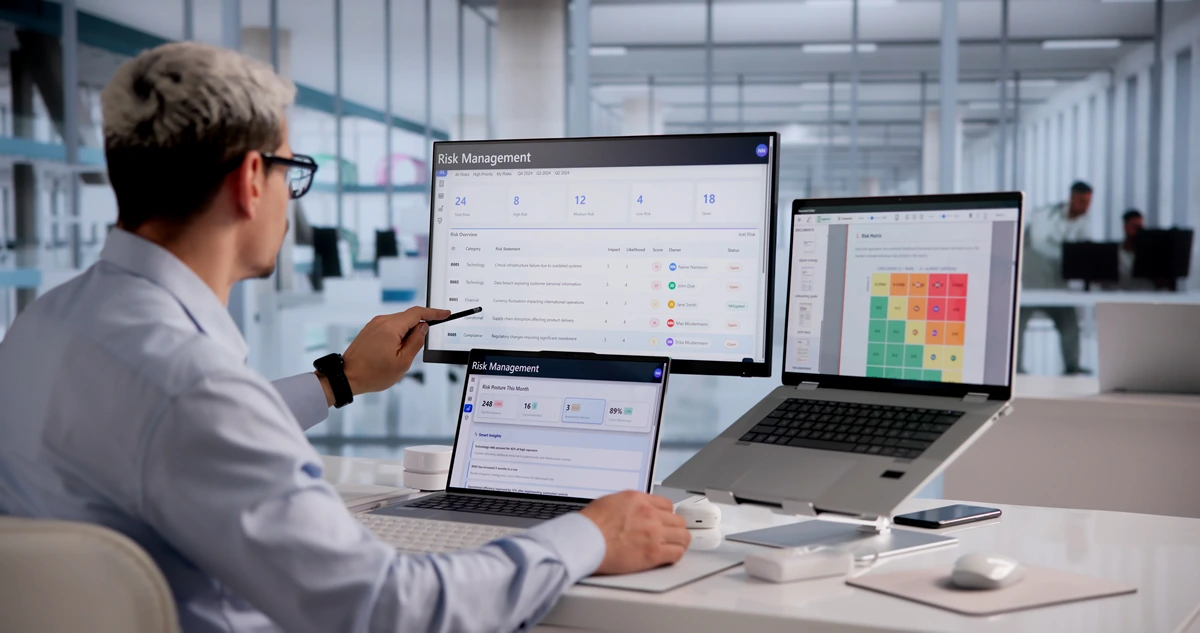
Effective hazard identification relies on multiple methods working together:
- Workplace walkthroughs to observe tasks in real conditions
- Job hazard analysis (JHA) to break down each task into individual steps and associated risks
- Incident and near-miss review to spot recurring patterns
- Employee feedback from those performing the work daily
- Safety data sheets (SDS) for chemical-related hazards
Combining these methods produces a more complete hazard picture than relying on a single approach.
How to Evaluate and Prioritize Risks
Once hazards are identified, teams must evaluate severity and likelihood to prioritize action.
| Likelihood / Severity | Low Severity | Medium Severity | High Severity |
|---|---|---|---|
| Low Likelihood | Monitor | Monitor | Address Soon |
| Medium Likelihood | Monitor | Address Soon | Address Immediately |
| High Likelihood | Address Soon | Address Immediately | Address Immediately |
This type of risk matrix gives teams a simple, visual way to prioritize which hazards need urgent attention versus ongoing monitoring.
Selecting Appropriate Risk Control Measures
The hierarchy of controls ranks risk control measures from most to least effective:
- Elimination – Remove the hazard entirely
- Substitution – Replace it with a safer alternative
- Engineering controls – Isolate people from the hazard (machine guards, ventilation)
- Administrative controls – Change how people work (training, signage, rotation schedules)
- PPE – Protect the individual as a last line of defense
For example, a manufacturing plant might eliminate a fall hazard by redesigning a platform, rather than simply requiring harnesses.
Common Mistakes to Avoid During Risk Assessments
- Treating risk assessments as a one-time exercise instead of an ongoing process
- Relying solely on management input without frontline worker feedback
- Failing to update assessments after process or equipment changes
- Using vague hazard descriptions instead of specific, actionable findings
- Storing records in disconnected spreadsheets, making trends hard to track
Avoiding these mistakes keeps assessments accurate, current, and genuinely useful for incident prevention.
How EHS Software Improves Risk Assessments

Manual risk assessments are time-consuming and prone to inconsistency across sites. EHS software addresses these challenges directly.
Centralized Risk Registers
Safety management software consolidates hazards, controls, and risk scores into a single digital risk register, accessible across multiple locations and teams.
Mobile Hazard Reporting
Field teams can document hazards, photos, and risk ratings instantly from a mobile device, instead of waiting to file paperwork later.
Automated Reminders and Reviews
EHS platforms automatically schedule reassessments and send alerts when controls need review, reducing the risk of outdated or forgotten assessments.
Data-Driven Prioritization
Built-in analytics highlight high-risk areas across an organization, helping safety teams focus resources where they matter most.
Risk Assessment Best Practices
- Involve employees who perform the task being assessed
- Use standardized templates for consistency across sites
- Reassess after incidents, near misses, or process changes
- Document both the hazard and the control measure clearly
- Combine job hazard analysis with broader site-wide assessments
- Use EHS software to track trends across multiple locations
Final Thoughts
A well-executed workplace risk assessment protects employees, supports compliance, and strengthens organizational resilience. By following a structured process, from hazard identification to control selection, businesses can move from reactive safety management to proactive incident prevention.
Actionable next steps:
- Schedule a baseline risk assessment for each work area if one doesn’t already exist.
- Train supervisors on the hierarchy of controls and risk matrix scoring.
- Involve frontline employees directly in hazard identification.
- Evaluate EHS software options to centralize and automate the process.
- Set a recurring review schedule rather than treating assessments as a one-time task.
Frequently Asked Questions
What is the purpose of a workplace risk assessment?
The purpose of a workplace risk assessment is to identify hazards, evaluate the likelihood and severity of harm, and implement appropriate controls. It helps organizations prevent injuries, meet legal compliance requirements, and create safer working conditions through a systematic, ongoing review process rather than a one-time evaluation.
How often should a workplace risk assessment be conducted?
Workplace risk assessments should be reviewed regularly, typically annually, and immediately after significant changes such as new equipment, processes, incidents, or near misses. High-risk industries like construction or manufacturing may require more frequent reviews to account for changing site conditions and evolving workplace hazards.
What is the difference between a risk assessment and a job hazard analysis?
A risk assessment evaluates hazards across an entire work area or process, while a job hazard analysis (JHA) breaks down a specific task into individual steps to identify hazards at each stage. Both methods complement each other and are often used together for comprehensive hazard identification.
What are risk control measures?
Risk control measures are actions taken to eliminate or reduce workplace hazards. They follow a hierarchy: elimination, substitution, engineering controls, administrative controls, and personal protective equipment (PPE). Elimination and substitution are considered most effective, while PPE serves as a last line of defense when other controls aren’t fully sufficient.
Can EHS software replace manual risk assessments?
EHS software doesn’t replace the human judgment needed to assess workplace conditions, but it significantly improves the process. It centralizes hazard data, automates reminders, enables mobile reporting, and provides analytics that make risk assessments faster, more consistent, and easier to track across multiple sites or departments.

Browse Our EHS Resources