Table of Contents
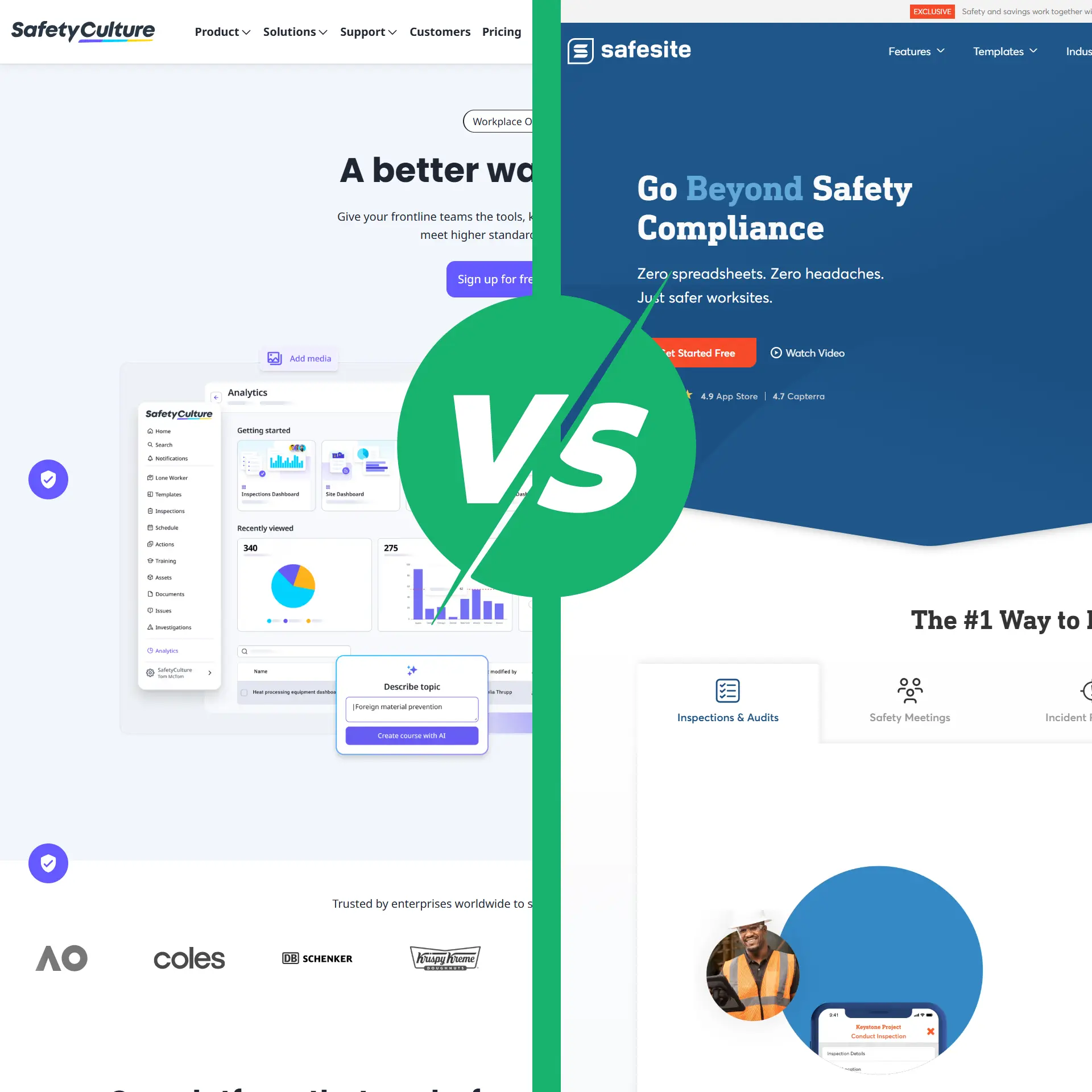
Quick Answer: SafetyCulture and Safesite are both mobile first platforms built around inspections, audits, and frontline safety reporting rather than full enterprise EHS suites. SafetyCulture is the broader, more established platform, with a larger template library, a wider integration marketplace, and adoption across quality, facilities, and operations teams beyond safety alone. Safesite is the more focused option, purpose built for construction and other high risk industries, with an unusually generous free tier that includes hazard management and incident reporting, not just inspections. Neither platform is meant to replace a full enterprise EHS system for organizations with deep environmental, occupational health, or ESG requirements.
Why Safety Leaders Compare SafetyCulture and Safesite
SafetyCulture and Safesite show up on the same shortlists constantly, and for good reason. Both platforms solve the same core problem: getting safety teams off paper forms and spreadsheets and onto mobile devices, quickly, without the multi month implementation that enterprise EHS suites typically require. Both offer genuinely usable free tiers, both are praised by reviewers for ease of use, and both are aimed at teams that need practical, field ready tools rather than deep configurability.
That similarity is exactly what makes the comparison useful. Once two platforms solve the same basic problem well, the decision comes down to specifics: how deep the free plan actually goes, how broad the integration ecosystem is, and which industries each platform was originally built to serve. This comparison draws on publicly available vendor information and aggregated feedback patterns from G2, Capterra, and GetApp to give safety leaders a clear, practical basis for choosing between the two.
SafetyCulture vs. Safesite at a Glance
| Category | SafetyCulture | Safesite |
|---|---|---|
| Origin | Formerly known as iAuditor | Founded 2012 in San Francisco |
| Primary focus | Broad workplace operations: inspections, audits, quality, facilities | Construction and high risk industry safety management |
| Free tier depth | Centered mainly on inspections and checklists | Includes hazard management, incident reporting, and a safety scorecard |
| Premium pricing | $24 per seat per month annual, $29 monthly | Reported $16 to $20 per user per month |
| Company scale | Widely recognized global brand across many industries | Smaller, roughly 18,000 companies served, lean team |
| Integration ecosystem | Larger, broader marketplace | Narrower, API available for custom work |
| Unique differentiator | Breadth across safety, quality, and operations teams | Foresight workers compensation insurance tied to safety data |
Company Background
SafetyCulture began as iAuditor, an inspection app that became one of the most recognized names in digital audits and checklists. Over time, the product expanded well beyond inspections into issue reporting, corrective actions, training, asset management, and broader operational visibility, and the rebrand from iAuditor to SafetyCulture reflects that shift. It is best understood today as a workplace operations platform used by safety, quality, compliance, facilities, and operations teams, not a safety only tool.
Safesite has a more specific origin story. It was founded in 2012 in San Francisco by CEO Peter Grant along with co-founders Leigh Appel and David Fontain, and has grown with modest venture backing from investors including OMERS Ventures and the George Kaiser Family Foundation. The company reports roughly 5.8 million dollars in annual revenue with a team of around 40 to 46 employees, and states its platform is used by more than 18,000 companies, concentrated in construction, agriculture, and manufacturing. Safesite has also extended into insurance through Foresight, a workers compensation provider powered by Safesite data, connecting day to day safety documentation to real cost outcomes.
The scale difference matters for buyers. SafetyCulture operates as a large, broadly known platform serving many types of teams across many industries, while Safesite operates as a smaller, more focused company that has deliberately stayed close to construction and high risk sectors rather than expanding into general operations management.
Free Tier Depth: Safesite’s Clearest Advantage
This is the single most concrete difference between the two platforms, and it is worth understanding in detail before you evaluate either one.
SafetyCulture’s free plan is centered on inspections and checklists, which is genuinely useful for teams whose main problem is paper based audits. Safesite’s free plan goes further, including a custom inspection builder, hazard management, incident reporting, and a full safety scorecard at no cost. According to Safesite’s own comparison of the two platforms, this depth gives small teams meaningfully more safety management capability at zero dollars than SafetyCulture’s free tier provides.
For a small construction subcontractor with no software budget, that gap can be the deciding factor. For a larger, multi department organization that plans to pay for a premium plan anyway, the free tier comparison matters less than the two platforms’ respective paid feature sets and ecosystem breadth.
Industry Focus and Use Case Breadth
SafetyCulture markets itself as a general workplace operations platform, and its actual customer base reflects that: construction, manufacturing, logistics, hospitality, retail, food safety, and facilities management all show up as common use cases. Quality teams and compliance teams use it alongside safety teams, which makes it a reasonable fit for organizations that want one inspection and issue reporting tool across multiple departments.
Safesite stays deliberately narrower. It was purpose built for construction, real estate, and other high risk sectors, and its feature set, from OSHA recordkeeping to toolbox talk content, reflects that focus. Reviewers in specialized industries like oil and gas note that Safesite’s toolbox talk library is general purpose rather than sector specific, which suggests the platform’s depth is strongest in mainstream construction and trades work rather than every high risk vertical.
If your organization needs one tool to serve safety, quality, and facilities teams together, that points toward SafetyCulture. If your primary need is construction focused safety management with a clear OSHA compliance path, Safesite’s narrower focus is a genuine strength rather than a limitation.
Integrations and Ecosystem
SafetyCulture offers a broader integration marketplace, which matters for organizations already running other business systems that need to connect with inspection and safety data. Safesite offers an API for custom integration work, but its third party ecosystem is narrower than SafetyCulture’s, a gap Safesite’s own materials acknowledge directly when comparing the two platforms.
For subcontractors using either platform as a standalone, safety specific tool, this difference is unlikely to matter much. For larger organizations managing complex workflows across project management, scheduling, and business intelligence tools, integration breadth deserves real weight in the decision.
Pricing Comparison
Both platforms publish more pricing detail than most enterprise EHS suites, though Safesite’s premium figures are described as third party reported rather than officially published.
| Pricing Factor | SafetyCulture | Safesite | |
|---|---|---|---|
| Free plan | Yes, centered on inspections | Yes, includes hazard management and incident reporting | |
| Paid plan pricing |
|
Reported $16 to $20 per user per month | |
| Enterprise pricing | Custom quote | Not specified as a separate tier | |
| Pricing transparency | Published on SafetyCulture’s site | Reported by third party sources, not officially published |
On a pure per seat basis, Safesite’s reported premium pricing runs lower than SafetyCulture’s published Premium rate, though buyers should confirm current numbers directly with each vendor before budgeting, since third party figures can shift.
Ease of Use and Customer Support
Both platforms earn consistently strong marks for ease of use, and this is arguably their biggest shared strength relative to enterprise EHS software. SafetyCulture’s inspection forms and mobile app are described as intuitive for frontline users, while Safesite reviewers repeatedly describe the platform as simple enough for field workers unfamiliar with digital safety tools to adopt without much training.
Support quality shows a similar pattern on both sides, generally positive with some inconsistency. Safesite reviewers specifically praise individual support representatives by name and describe the team as responsive and hands on during setup, with at least one long term customer noting they had not needed support in roughly two years after early setup issues were resolved. SafetyCulture’s support resources scale with plan tier, and public reviews generally highlight ease of use over support specifically, suggesting the product’s simplicity itself reduces how often users need to reach support in the first place.
Which Should You Choose?
Choose SafetyCulture if:
- You need one platform to serve safety, quality, facilities, and operations teams together
- Your organization operates across diverse industries beyond construction
- A larger integration marketplace and template library matter for your workflow
- You want a more established, widely recognized brand with a longer track record at scale
Choose Safesite if:
- You are a construction subcontractor or small safety team with no software budget
- You want the most functional possible free tier, including hazard management and incident reporting, not just inspections
- OSHA recordkeeping at an affordable premium price point is a specific requirement
- Connecting safety performance data to workers compensation insurance costs through Foresight is relevant to your broader cost strategy
Final Verdict
SafetyCulture and Safesite solve a similar problem from different starting points. SafetyCulture grew from a widely adopted inspection app into a broad workplace operations platform used across safety, quality, facilities, and compliance teams, and its scale shows up in a larger integration marketplace and template library. Safesite stayed narrower on purpose, building specifically for construction and high risk industries and putting real safety management functionality, not a limited trial, into its free tier.
Neither choice is wrong for most safety teams evaluating mobile first inspection software. The right answer depends on how many departments need to share the platform and how much your organization values a specialist tool built around construction and OSHA compliance versus a broader, more established operations platform. Request a free trial of both, run the same inspection workflow through each, and let your team’s actual day to day usage settle the decision.
Frequently Asked Questions
Is SafetyCulture or Safesite better for construction companies?
Safesite is generally the stronger fit for construction specifically, since it was purpose built for construction and other high risk sectors and includes OSHA recordkeeping as a core paid feature. SafetyCulture also serves construction customers well, but its broader focus across quality, facilities, and operations teams makes it a more general purpose choice rather than a construction specialist.
Which platform has a better free plan, SafetyCulture or Safesite?
Safesite’s free plan is more functional. It includes a custom inspection builder, hazard management, incident reporting, and a safety scorecard, while SafetyCulture’s free plan centers mainly on inspections and checklists. For small teams that need real safety management capability without paying, Safesite’s free tier offers more out of the box.
Which is cheaper, SafetyCulture or Safesite?
Based on published and reported pricing, Safesite’s premium tier, reported at $16 to $20 per user per month, runs lower than SafetyCulture’s published Premium plan at $24 to $29 per seat per month. Both companies can change pricing at any time, so confirm current rates directly before budgeting.
Does SafetyCulture or Safesite have better integrations?
SafetyCulture offers a broader third party integration marketplace than Safesite, which mainly offers API access for custom integration work. Organizations that need to connect safety data with several other business systems will generally find SafetyCulture’s ecosystem more developed.
Can SafetyCulture or Safesite replace a full EHS software suite?
Neither platform is designed to fully replace an enterprise EHS suite. Both focus on inspections, audits, incident reporting, and corrective actions rather than deep environmental compliance, occupational health case management, industrial hygiene, or ESG reporting. Organizations with those broader requirements should compare both platforms against dedicated enterprise EHS software such as Cority, Intelex, or VelocityEHS.

Browse Our EHS Resources